-
Step by step guide on how to implement different networking protocols on Juniper MX routers
Juniper Lab Simulations Series Juniper Lab Simulations Part 1: Introduction to Junos https://youtu.be/57gX8hHc6KM Junos Lab Simulation Part 2: Basic Interface Configuration on MX Routers – https://youtu.be/0un0we8bnUc Juniper Lab Simulation Part 3: Implementing Link Aggregation on Juniper Routers – https://youtu.be/gavhQsdA8Vs Juniper Lab Simulation Part 4: Implementing Basic OSPF Using three commands on Juniper Routers – https://youtu.be/5YnGKYHB09Y
September 14, 2025Read More -
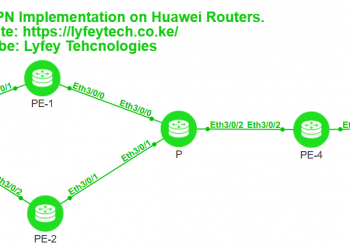
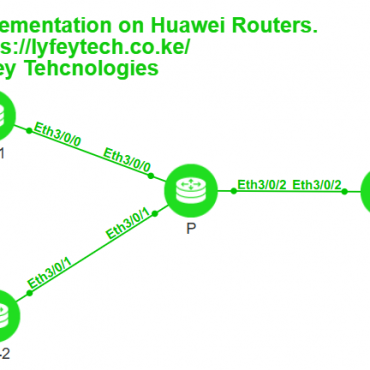
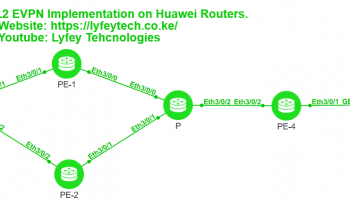
L2 EVPN Implementation on Huawei Routers.
EVPN Basic concepts. EVPN is a next-generation full-service bearer VPN solution. It subverts the traditional L2VPN’s mechanism of learning MAC addresses on the forwarding plane, introduces the control plane, and uses BGP extensions to transmit MAC address information. Based on MP-BGP, EVPN defines a series of new BGP EVPN route types that enable different sites
February 16, 2025Read More -
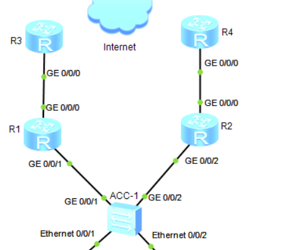
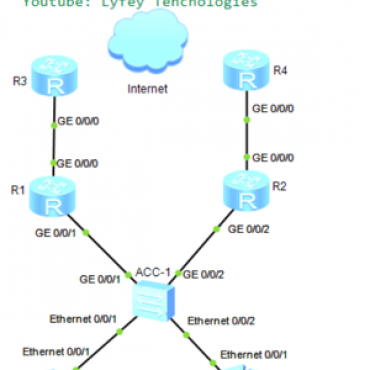
VRRP Monitoring of the Uplink Interface status on Huawei routers.
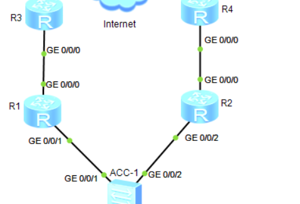
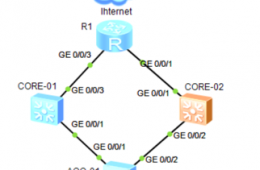
VRRP basic concepts. If association between VRRP and the uplink interface is not configured and the uplink interface or link of R1(master) in the VRRP group fails, the VRRP group cannot detect the fault and the master cannot forward traffic. In this case, the active/standby switchover cannot be performed, causing a traffic blackhole. Networking description.
February 9, 2025Read More
-
Step by step guide on how to implement different networking protocols on Juniper MX routers
Juniper Lab Simulations Series Juniper Lab Simulations Part 1: Introduction to Junos https://youtu.be/57gX8hHc6KM Junos Lab Simulation Part 2: Basic Interface Configuration on MX Routers – https://youtu.be/0un0we8bnUc Juniper Lab Simulation Part 3: Implementing Link Aggregation on Juniper Routers – https://youtu.be/gavhQsdA8Vs Juniper Lab Simulation Part 4: Implementing Basic OSPF Using three commands on Juniper Routers – https://youtu.be/5YnGKYHB09Y
-
February 16, 2025
L2 EVPN Implementation on Huawei Routers.
EVPN Basic concepts. EVPN is a next-generation full-service bearer VPN solution. It subverts the traditional L2VPN’s mechanism of learning MAC addresses on the forwarding plane, introduces the control plane, and uses BGP extensions to transmit MAC address information. Based on MP-BGP, EVPN defines a series of new BGP EVPN route types that enable different sites
-
February 9, 2025
VRRP Monitoring of the Uplink Interface status on Huawei routers.
VRRP basic concepts. If association between VRRP and the uplink interface is not configured and the uplink interface or link of R1(master) in the VRRP group fails, the VRRP group cannot detect the fault and the master cannot forward traffic. In this case, the active/standby switchover cannot be performed, causing a traffic blackhole. Networking description.

-
Step by step guide on how to implement different networking protocols on Juniper MX routers
Juniper Lab Simulations Series Juniper Lab Simulations Part 1: Introduction to Junos https://youtu.be/57gX8hHc6KM Junos Lab Simulation Part 2: Basic Interface Configuration on MX Routers – https://youtu.be/0un0we8bnUc Juniper Lab Simulation Part 3: Implementing Link Aggregation on Juniper Routers – https://youtu.be/gavhQsdA8Vs Juniper Lab Simulation Part 4: Implementing Basic OSPF Using three commands on Juniper Routers – https://youtu.be/5YnGKYHB09Y
-
L2 EVPN Implementation on Huawei Routers.
EVPN Basic concepts. EVPN is a next-generation full-service bearer VPN solution. It subverts the traditional L2VPN’s mechanism of learning MAC addresses on the forwarding plane, introduces the control plane, and uses BGP extensions to transmit MAC address information. Based on MP-BGP, EVPN defines a series of new BGP EVPN route types that enable different sites
-
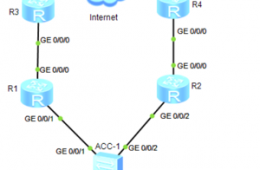
VRRP Monitoring of the Uplink Interface status on Huawei routers.
VRRP basic concepts. If association between VRRP and the uplink interface is not configured and the uplink interface or link of R1(master) in the VRRP group fails, the VRRP group cannot detect the fault and the master cannot forward traffic. In this case, the active/standby switchover cannot be performed, causing a traffic blackhole. Networking description.